

Farmers’ Roundup: A Conversation Worth Having
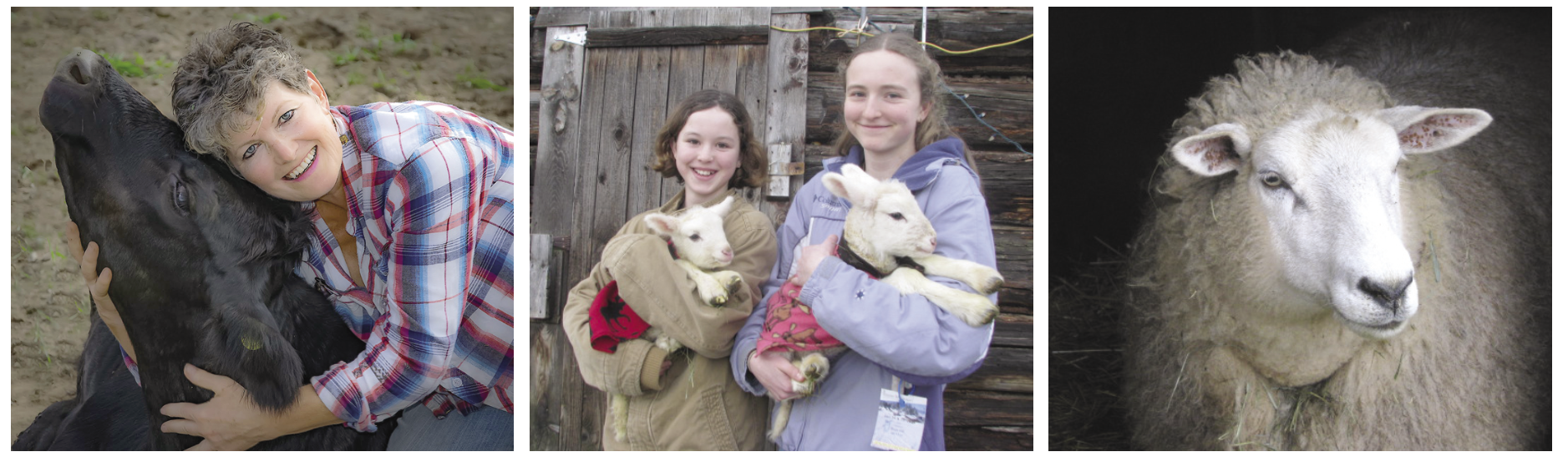
High Croft Farm in Notch Hill, from left to right: Una St.Clair with a calf, the Friesen sisters from Sorrento, and a resident sheep (photos contributed)
By Una St.Clair, Chair, Shuswap Farm Co-op
Farming in the Shuswap has never been simple—but it’s fair to say the pressures have been stacking up. Rising costs, limited access to infrastructure, land constraints, and the sheer isolation of rural farming are realities many local producers face every day. At the same time, there’s a growing sense that we could be doing a better job of working together locally, rather than each operation trying to solve the same problems on its own.
That’s the idea behind the Farmers’ Roundup, taking place Saturday, February 21, from 9:00 am to 1:00 pm, with lunch included.
This is not a pitch meeting. It’s not a polished rollout of a new organization. And it’s certainly not a done deal. The Farmers’ Roundup is a working conversation—one focused on listening to farmers and producers about what’s actually hard right now, where the real pain points are, and whether a cooperative approach could help in practical, meaningful ways.
The discussion will revolve around four broad pillars that have emerged through early brainstorming, all of which are very much open to challenge, refinement, or rejection.
The first is a Farmers Exchange—the idea that sharing or coordinating access to things like tools, equipment, feed, livestock sales, or services could reduce costs and isolation for smaller operations. Many farmers already do this informally. The question is whether a co-op could make it easier, more reliable, or more efficient without adding red tape.
The second pillar is Collaboration, Cooperation, Advocacy, and Education. The Shuswap is home to many organizations working in food and agriculture, and no one wants duplication. Instead, the focus is on better coordination, stronger connections, mentoring, and making sure rural farmers’ voices are heard where decisions are being made.
The third pillar looks at Shared Infrastructure. Cold storage, freezer space, retail access, and processing facilities are expensive—often prohibitively so—for individual farmers. Shared infrastructure could help extend seasons, reduce waste, and improve market access, but only if it’s designed with real-world farming realities in mind.
Finally, there’s Productive Land. Access to suitable land remains a barrier for many current and aspiring farmers. At the same time, underused land exists across the region. How those two realities might be better aligned is a conversation worth having.
Above all, the goal of the Farmers’ Roundup is clarity. If farmers see value in these ideas, that’s important to know. If they don’t, that’s just as important. A cooperative only works if it’s built by the people who would actually use it.
This conversation is an invitation—to show up, speak plainly, and help shape what comes next. Or to say, honestly, that this isn’t the right path. Either way, listening comes first.