

Building Hope and a Vision for Recreation in the Shuswap
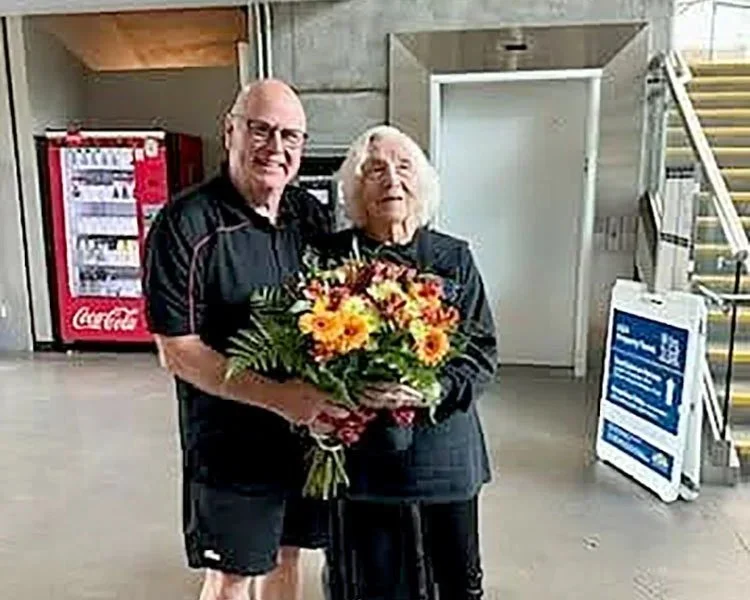
Betty, a 102-year-old swimmer from White Rock, with Barry Healey.
By Melissa Bloxham
For Barry Healey, the conversation about recreation in Salmon Arm isn’t simply about replacing an aging pool. It’s about what kind of community Salmon Arm and the surrounding Shuswap want to be in the decades ahead.
As president of the Shuswap Sports & Leisure Society, Barry spoke October 1 at a community round table at Okanagan College in Salmon Arm, about the challenges facing sport and recreation locally, and the need to bring athletes, coaches, organizations, residents and local governments together around a shared vision.
His message was simple: recreation is an investment that reaches from babies to seniors, while also creating opportunities to bring people, events and economic activity into the region.
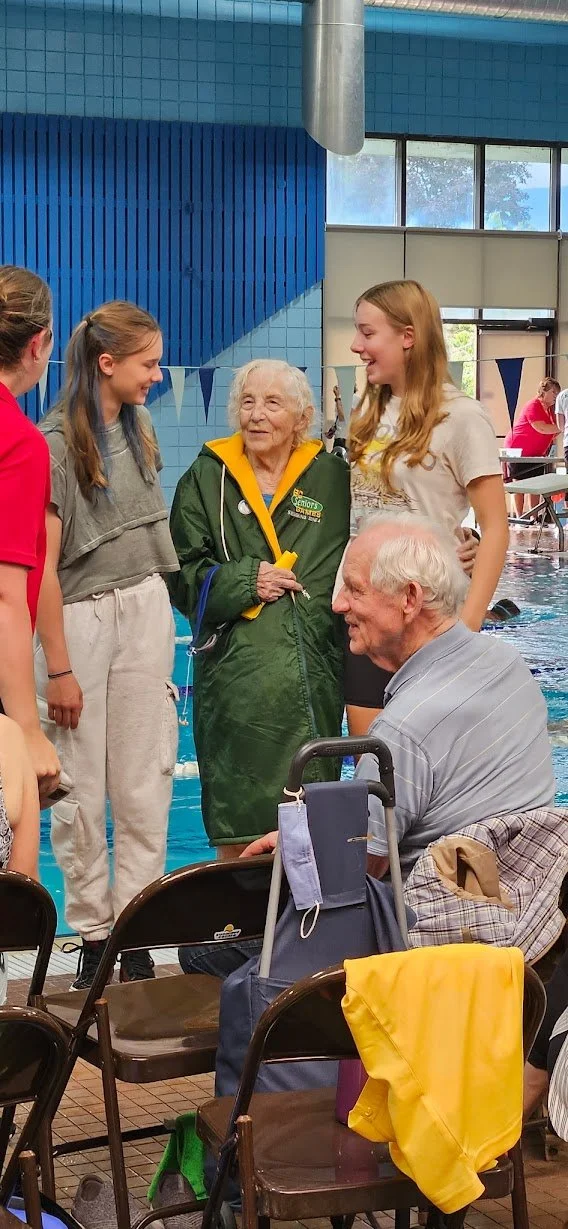
Betty, who continues to train and recently competed in the 55+ BC Games in Salmon Arm, inspires local swimmers. (Photos Contributed)
The Shuswap has continued to produce talented athletes, including swimmers who have represented Canada, but Barry says local coaches and program facilitators have often had to build programs and find resources on their own. Aging infrastructure adds another challenge. Facilities that don’t meet competition standards mean athletes must travel, events are lost to other communities and some athletes eventually have to leave the area to progress in their sport.
Those lost events also represent lost economic opportunities. Sporting events bring athletes, coaches, families and spectators into a community, filling hotels, eating in restaurants, shopping locally and supporting other businesses. Barry pointed to events that have gone to communities such as Kamloops because Salmon Arm didn’t have the facilities or flexibility required to host them. He estimates the community also missed out on significant revenue because it did not have a track available for the 55+ BC Games.
While attracting sports tourism and supporting the development of top-tier athletes are important, they aren’t the only goals. At the heart of the vision is creating opportunities for people in the community to stay active throughout their lives.
Barry shared the story of a woman who once approached him while swimming laps at the pool. Years earlier, he had taught her to swim and encouraged her to keep active. After later losing a leg, she told Barry she wondered whether she would still be alive had he not pushed her to keep swimming.
Another swimmer of note is Betty from White Rock, who is still training and racing at 102. She swam at the 55+ BC Games held in Salmon Arm, inspiring the local swim team and demonstrating how access to recreation can help people remain active throughout their lives.
Stories like these demonstrate why the Society believes a multi-use recreation facility could have long-term benefits for the community.
Marty Gibbons, Columbia Shuswap Regional District Director for Area C, shared one potential approach: pursuing the project as a regional recreation facility through the CSRD. Under the concept he described, the CSRD could borrow the funds and own the facility while contracting the City of Salmon Arm to operate it.
By approaching recreation as a collective project involving Salmon Arm and CSRD, the facility could serve a larger regional population while sharing the financial responsibility. Gibbons suggested this model could offer another avenue for addressing one of the biggest barriers to a new facility: how to pay for it.
Ultimately, moving a project like this forward would depend on support from voters across the participating electoral areas and whether the community sees value in making the investment.
The vision is not necessarily to build everything at once. A regional facility could be developed in stages, incorporating multiple recreational and community uses while creating the capacity to host larger sporting events as the region grows.
For Barry, the priority is establishing a plan and timeline rather than continuing to delay decisions. He pointed to the increasing cost of construction as one consequence of waiting, with facilities that could have been built for significantly less years ago now requiring much larger investments.
The Society is encouraging residents to become part of the conversation and ask local candidates and elected representatives how they plan to support recreation infrastructure in the region.
The answer isn’t simply putting more money into aging facilities. It’s bringing people together, creating a long-term plan and recognizing recreation as an investment in health, athletes, community and the local economy.
The Shuswap Sports & Leisure Society is also looking for community input and new board members.
Get involved. Share your ideas. Contact: shuswapsportsandleisure@gmail.com
Community Round Table discussion hosted by Barry Healey, President of the Shuswap Sports & Leisure Society. (Photo Credit: Melissa Bloxham)
